How To Build A Rockery: A Step By Step Guide
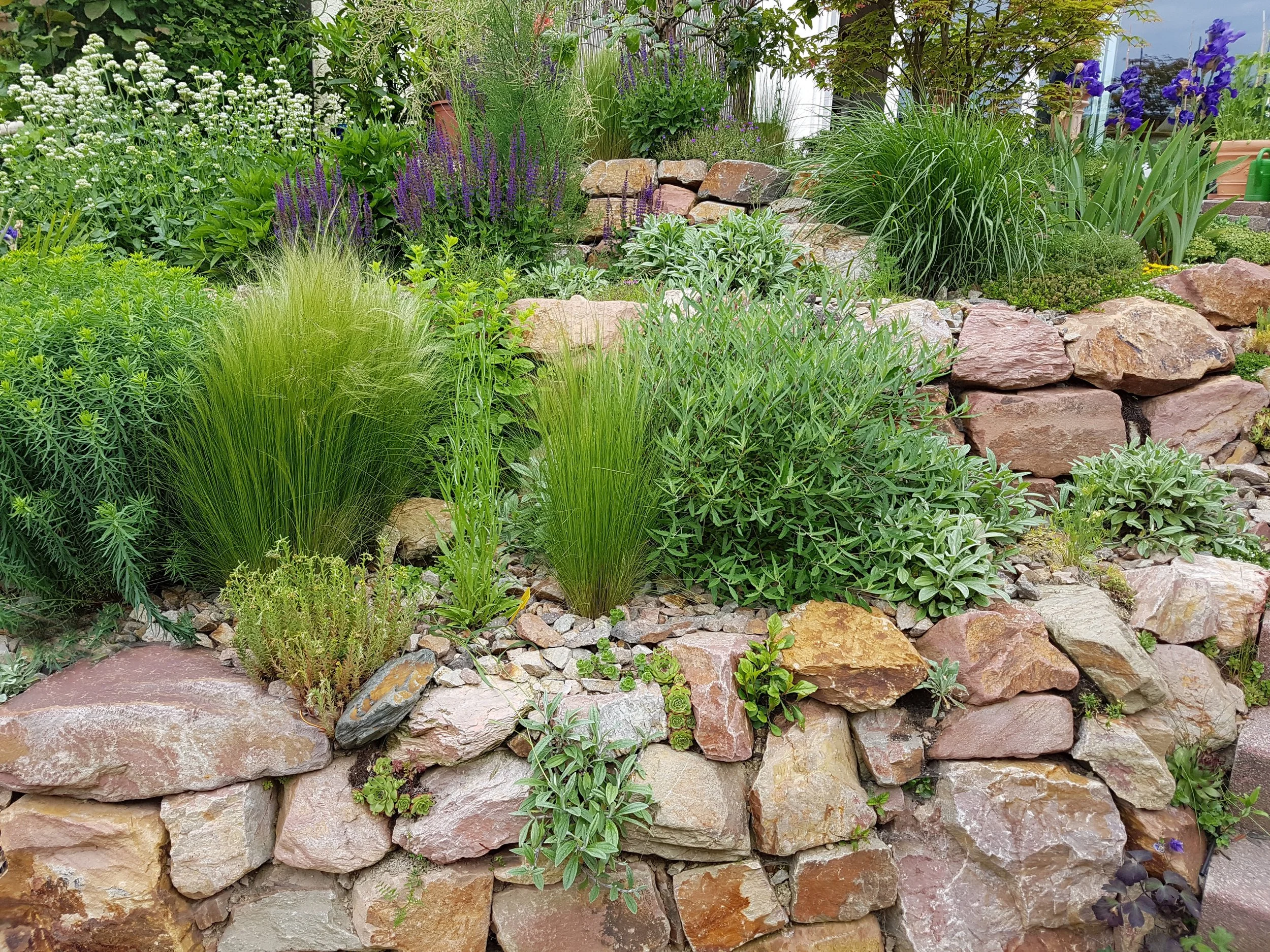
Alt text: A lush garden featuring a variety of green plants, purple flowers, and ornamental grasses growing among a layered rockery wall made of large, irregular rockery stones.
Brief Overview of Garden Rockeries
Rockeries are fascinating garden features that mix natural stones and plants to create an eye-catching focal point. They add texture and depth to outdoor spaces, providing a mix of rugged beauty and delicate plant life.
Garden rockeries improve visual interest and offer homes for a variety of plants, especially those that grow well in sunny, well-drained areas. They bring a natural look to gardens, making them suitable for both small and large landscapes.
Step 1: Choose and Plan Your Location
Selecting a Spot with Good Light
Choose a location that receives ample sunlight, as most rockery plants prefer sunny, well-drained areas. Avoid spots overshadowed by trees or large shrubs.
Deciding on Size and Shape
Determine the size and shape of your rockery. Organic, irregular shapes often look the most natural, but you can opt for formal designs if they suit your garden style.
Creating a Design Sketch
Sketch your rockery design on paper or digitally. Plan the placement of large rocks, smaller stones, and planting pockets to guide your construction process.
Step 2: Mark Out and Prepare the Area
Marking the Perimeter
Use string, sand, or marker spray to clearly outline the perimeter of your rockery. This provides a visual guide for the area you'll work within.
Clearing Grass, Weeds, and Plants
Remove all grass, weeds, and unwanted plants from the marked area to expose bare soil. This ensures a clean slate for your rockery construction.
Creating a Mound for Height
If building on flat ground, consider creating a mound to add height and visual interest. This can be achieved by piling soil or rubble in the centre of the area.
Step 3. Lay the Base for Drainage
Adding a Drainage Layer
Add a 15–20cm (6–8 inches) layer of coarse rubble, broken bricks, or pea shingle. This drainage layer prevents waterlogging and provides a solid foundation.
Using a Weed Control Membrane
Lay a weed control membrane over the drainage layer. This helps prevent weed growth while allowing water to drain through, maintaining the rockery's integrity.
Step 4. Add Soil and Prepare Planting Mix
Creating a Well-Draining Soil Mix
Combine equal parts of multi-purpose compost, sharp sand, and grit to create a soil mix that drains well. Adjust the mix based on the specific needs of your chosen plants.
Laying the Base Layer
Spread a base layer of this planting mix over the weed control membrane. This supports the placement of rocks and provides a foundation for future planting.
Step 5. Position the Largest Rocks
Using Keystones for Stability
Start by positioning the largest rockery stones, known as keystones. These provide stability and structure to your rockery. Use a crowbar or seek help if needed due to their weight.
Burying Rocks for Natural Appearance
Partially bury each large rock, up to a third of its depth, to anchor it securely. Tilt the rocks slightly backward and vary their orientation for a more authentic, natural look.
Step 6. Arrange Smaller Rocks and Create Planting Pockets
Filling with Smaller Stones
Arrange smaller stones around the larger rocks, embedding them in the topsoil to support the structure. This adds texture and stability to your rockery.
Creating Planting Pockets
Leave gaps and pockets between the stones to serve as planting areas. These pockets will be filled with a suitable soil mix for your plants.
Section 7. Add Topsoil and Planting Mix
Filling Pockets with Planting Mix
Fill the planting pockets with your well-drained top soil, ensuring adequate space for the plant roots to grow and thrive.
Ensuring Depth for Roots
Add enough planting mix to provide the necessary depth for your chosen plants. This supports healthy root development and plant stability.
Step 8. Plant Your Rockery
Choosing Suitable Plants
Select plants that thrive in rockery conditions, such as alpines, succulents, and drought-tolerant species. These plants are well-suited to sunny, well-drained environments.
Positioning and Planting
Arrange the plants in their pots to plan the layout. Once satisfied, plant them into the pockets, firming the soil around their roots for stability.
Adding Grit or Gravel
Add a layer of horticultural grit or gravel around the plants. This helps suppress weeds, retain moisture, and enhances the rockery’s appearance.
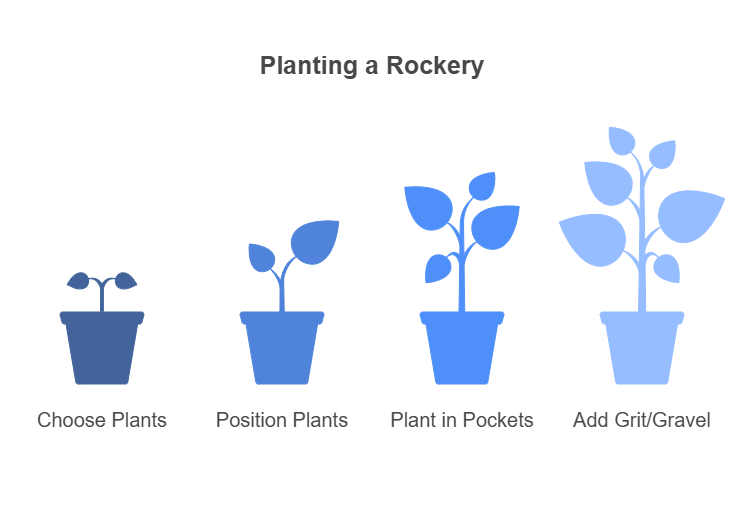
Alt text: A step-by-step guide to planting a garden rockery, showing four blue silhouette icons of potted plants increasing in size. The first icon shows a small plant in a pot labelled "Choose Plants," the second shows a slightly larger plant in a pot labelled "Position Plants," the third displays a plant in a pocket labelled "Plant in Pockets," and the fourth features a large, mature plant in a pot labelled "Add Grit/Gravel."
Step 9. Mulch and Finish
Applying Mulch for Aesthetics and Drainage
Spread a layer of slate mulch over the surface. This improves drainage, keeps weeds at bay, and provides a polished finish.
Watering to Establish Plants
Water the rockery thoroughly to help plants establish. Ensure the water drains well to prevent waterlogging.
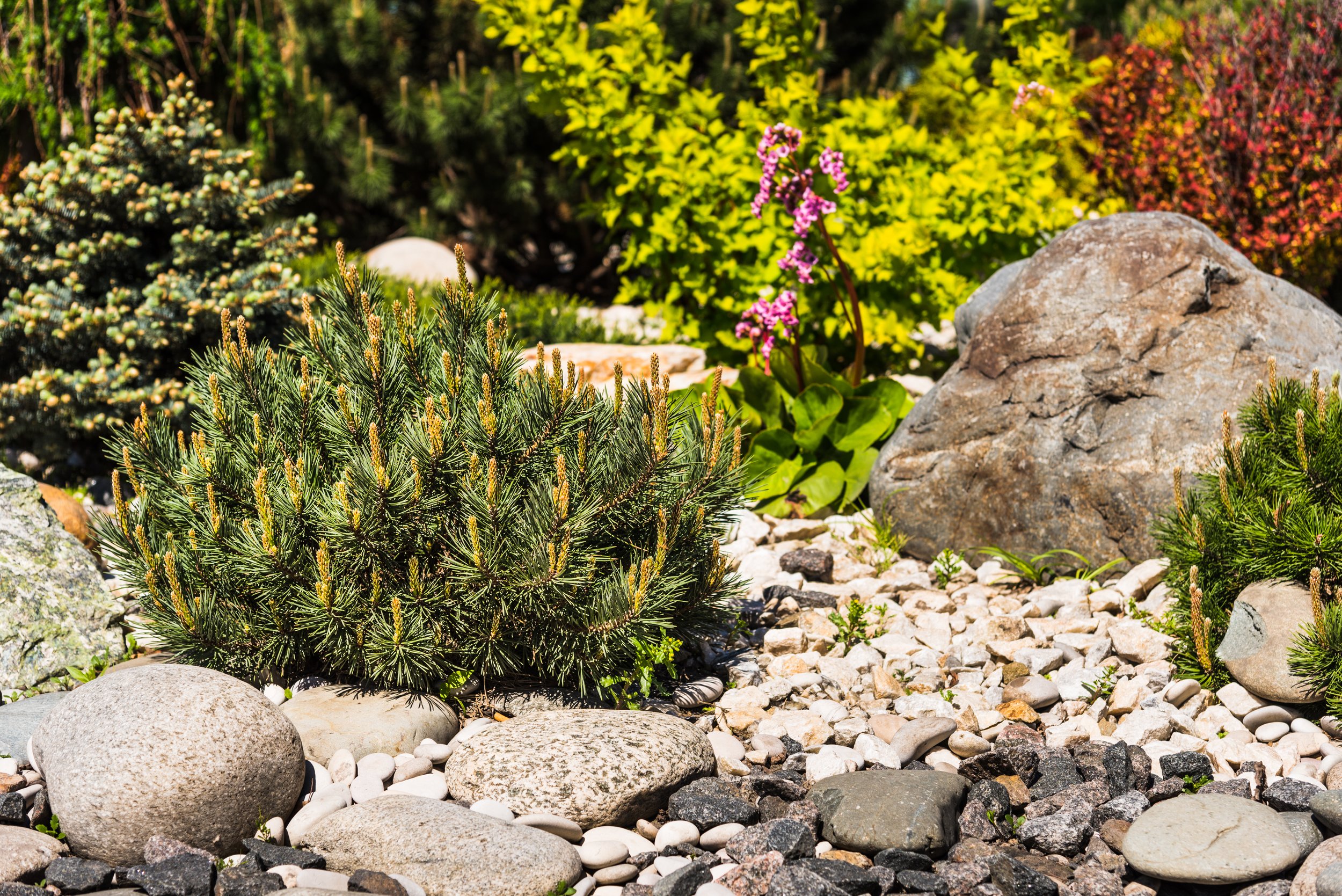
Alt text: A garden rockery featuring various plants and rockery stones, including a small evergreen shrub, pink flowers, and large glacial boulders, with colourful foliage in the background.
Choosing The Right Rockery Stones
Essential Information Before Purchasing
Choosing the right stones for your rockery is all about finding materials that suit your style and stand up to the weather. Slate is a favorite because of its natural, layered look—it's easy to break into thin, attractive slabs that add texture and interest. Granite is another great option; it's tough and durable, with a speckled, coarse appearance that gives your rockery a bold, rugged feel and ensures it lasts for years.
Limestone brings a softer, more muted vibe with its light colors and smooth surfaces, perfect if you want a gentle, natural look. Just keep in mind that limestone can be a bit more weather-sensitive over time. When picking stones, think about the style you're after, your local climate, and how stable you need the structure to be. Mixing different types of stones can also make your rockery look more natural and vibrant, creating a beautiful and resilient feature in your garden.
Conclusion
Recap of the Process
Building a rockery involves careful planning, from choosing the location and preparing the base to positioning rocks and planting. Each step contributes to creating a visually appealing and functional garden feature.
Encouragement to Create a Rockery
With its natural beauty and versatility, a rockery can transform your garden into a stunning landscape. Embrace the opportunity to create your own rockery and enjoy the rewarding process of enhancing your outdoor space.
Frequently Asked Questions (FAQ)
1. What types of plants are best for a rockery?
Alpines, succulents, and drought-tolerant species are ideal, as they thrive in well-drained, sunny conditions typically found in rockeries.
2. How do I ensure proper drainage for my rockery?
Use a drainage layer of coarse rubble or pea shingle and incorporate a well-draining soil mix to prevent waterlogging.
3. Can I build a rockery on flat ground?
Yes, you can create a mound for added height and visual interest, even on flat ground.
4. How do I maintain my rockery?
Regularly check for weeds, ensure proper drainage, and occasionally refresh the mulch or gravel to maintain appearance and functionality.
5. Is it necessary to use a weed control membrane?
While not mandatory, using a weed control membrane helps prevent weed growth and aids in soil retention, improving the rockery's longevity.